Embedded Environment: Construction Stamped Electrical Terminals Engineering Guide
A terminal block in a concrete-embedded floor box that passes factory testing can trigger a ground fault 10 years later — invisible during annual safety inspections. The failure surfaces when alkaline corrosion from concrete’s pH 12–13 pore water consumes the tin plating and thins the brass base metal to half its cross-section.
In this guide, you will learn corrosion-resistant material selection for construction-grade stamped terminals. You will also find UL 486 and IEC 60352 compliance pathways and torque retention validation for screw-type terminals.
Read on for the full engineering guide.
Embedded & Outdoor Exposure
Concrete Embedment Corrosion Mechanisms
Construction terminals face a corrosion environment unlike any other industry. A terminal inside a concrete-embedded junction box operates in an alkaline electrolyte with pH levels ranging from 12 to 13.5 — comparable to household bleach — sustained by moisture that diffuses through the concrete at rates of 0.5–2 mm per day depending on the water-cement ratio.
This alkaline environment attacks brass terminals through dezincification, a selective corrosion mechanism where zinc leaches out of the brass alloy (nominally Cu70/Zn30), leaving behind a porous copper sponge with 20–30% of the original mechanical strength.
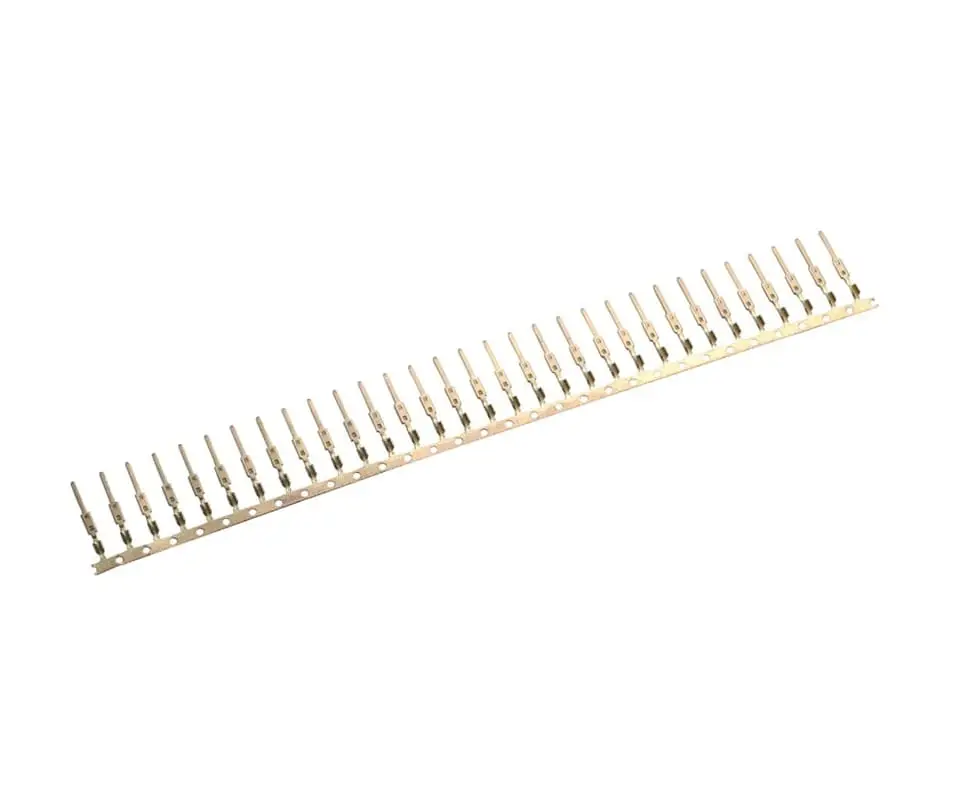
Within 10 years of continuous exposure, the terminal’s cross-section at the screw thread root can thin from 0.8 mm to 0.3 mm, creating a hot spot under load that accelerates the remaining corrosion until the terminal fractures during routine retorquing by an electrician.
Thermal Cycling in Outdoor Conduit
Outdoor conduit installations add thermal cycling to the corrosion equation. A junction box mounted on a rooftop in Chicago cycles from –30°C during a January night to 70°C inside the box on a July afternoon — a 100°C swing that drives differential expansion between the brass terminal body (20 µm/m·°C CTE) and the steel terminal screw (12 µm/m·°C CTE).
Each cycle loosens the screw by a fraction of a degree, and after 500 cycles the clamping force on the wire conductor drops below the minimum required to maintain a gas-tight contact.
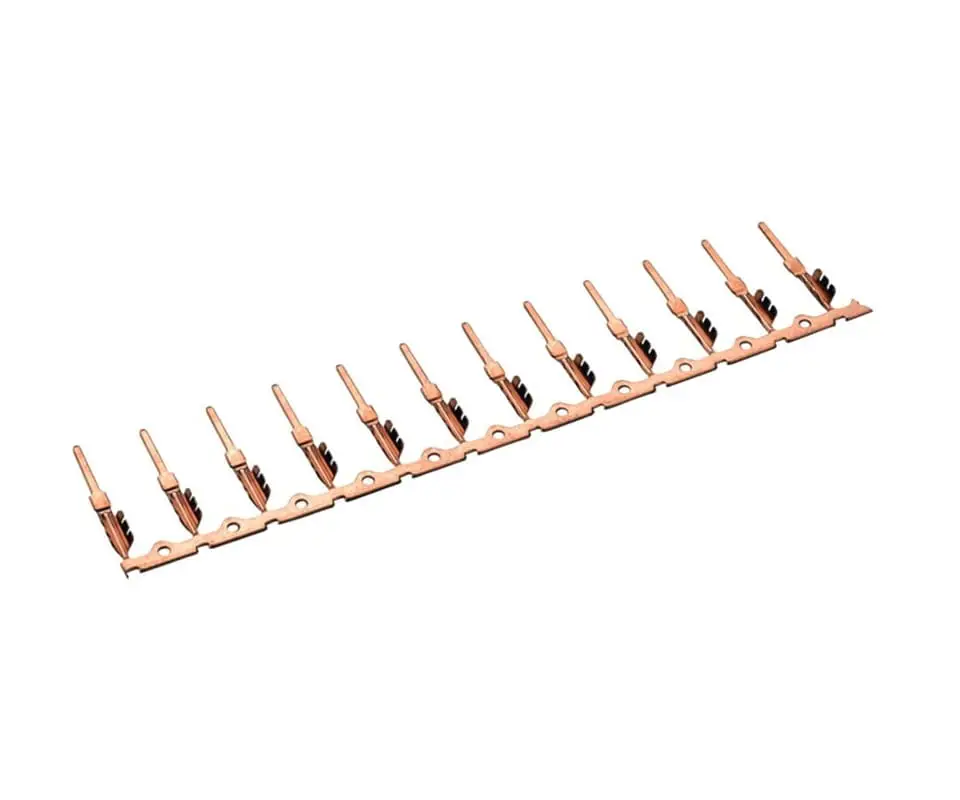
This loosening allows oxygen to reach the contact interface, initiating fretting corrosion that increases the joint resistance from 2 milliohms to over 100 milliohms — a 50× increase that generates enough heat to melt PVC insulation at the terminal block.
[Compliance Anchor]: Terminals for embedded or continuously wet construction environments must survive 90-day exposure to synthetic concrete pore solution (pH 13.2, saturated Ca(OH)₂ with 0.5M NaOH) per ASTM G109 without dezincification depth exceeding 10% of the terminal wall thickness at the thinnest cross-section.
💡 Embedment Corrosion Blind Spot: Terminals that pass UL 486A-486B at 25°C can still dezincify in alkaline concrete — qualification testing does not simulate the pH 12–13 electrolyte that drives the slow chemical attack over years five through ten of building occupancy — request an embedment corrosion validation plan for your terminal geometry before spec’ing the plating stack.
Building Electrical Code Framework
UL 486A-486B Thermal Testing Protocol
Construction terminal qualification in North America centers on UL 486A-486B, the standard for wire connectors and soldering lugs for use with copper conductors. The standard requires a static heating test where the terminal carries rated current until temperature stabilizes, with the temperature rise limited to 50°C above ambient at the hottest point.
This test exposes terminals with inadequate cross-section or poor plating quality: a terminal that passes rated current testing at 25°C ambient can fail at 40°C ambient if the terminal’s internal resistance generates enough additional heat to exceed the 50°C rise limit.
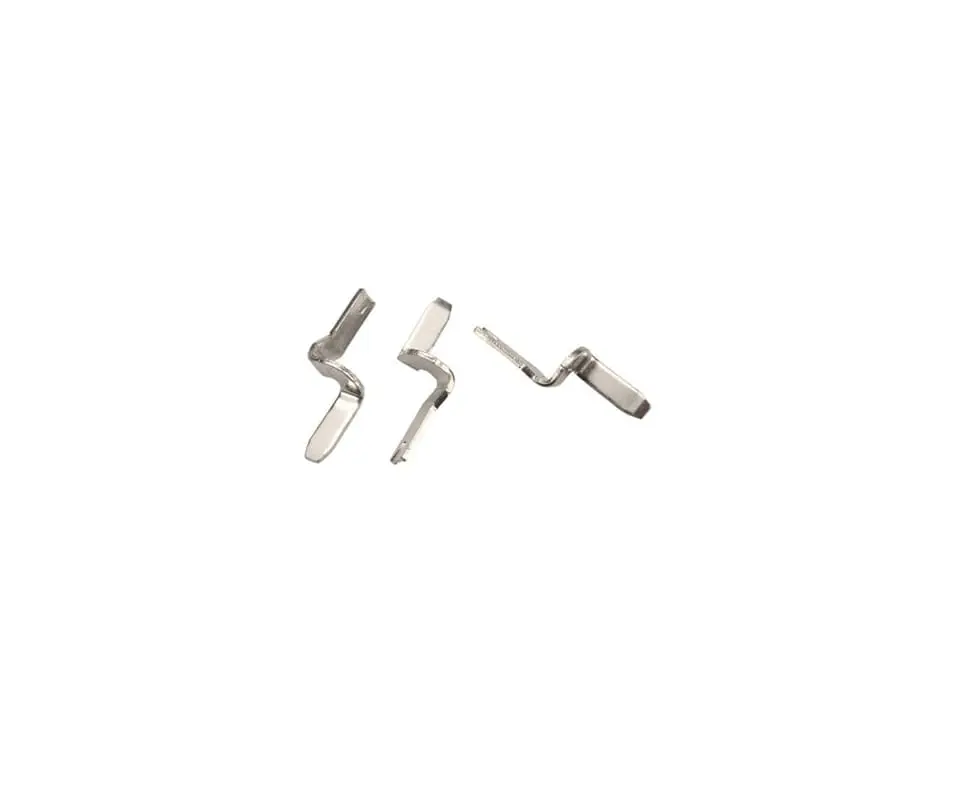
The test must run at the terminal’s maximum rated wire size because the larger conductor acts as a heat sink that masks terminal hot spots during testing at smaller wire gauges.
Grounding and bonding terminals follow UL 467, which adds requirements for corrosion resistance and mechanical durability specific to grounding connections. A grounding terminal must maintain a bonding path resistance below 0.1 ohm after the full environmental conditioning sequence, including salt spray and humidity exposure.
This requirement rules out bare copper terminals for outdoor grounding applications — the copper oxide layer that forms within weeks of outdoor exposure is non-conductive enough to raise the bonding resistance above the 0.1 ohm threshold. Tin-plated copper or brass terminals with a nickel barrier provide the corrosion resistance needed for long-term ground path integrity.
In the EU and IEC markets, construction metal stamping terminals must comply with IEC 60998 (connecting devices for low-voltage circuits) and IEC 60947-7-1 (terminal blocks for copper conductors). These standards add a glow-wire flammability test per IEC 60695-2-11 at 850°C for terminals in unattended equipment, simulating the effect of a poor connection that overheats to the point of ignition — a test that evaluates the terminal’s contribution to fire propagation rather than only its electrical performance at rated current.
[Compliance Anchor]: Screw-type construction terminals must retain a minimum of 80% of the initial tightening torque after 500 thermal cycles per UL 486A-486B, measured on the terminal screw without retightening between cycles — terminals that drop below this threshold require a lock washer or thread-locking feature that the stamping process must accommodate without adding a secondary assembly step.
Stamped Terminal Archetypes in Construction
Distribution Panel and Junction Box Terminals
Terminal blocks inside distribution panels and junction boxes represent the highest-volume construction terminal category. A typical residential load center contains 40–80 terminal positions, each accepting 1.5–6 mm² copper conductors secured by a stamped brass terminal with an M4 steel screw and a formed pressure plate that distributes the clamping force across the wire surface.
The terminal’s formed geometry must prevent the wire from extruding out from under the pressure plate during tightening — a common defect in terminals where the pressure plate’s edge radius is less than 0.3 mm, creating a stress concentration that cuts into the copper conductor strands rather than compressing them into a gas-tight bundle.

This cutting action reduces the effective contact area by 50–70%, generating a hot spot that manifests during the first sustained high-load event.
Building Automation Signal-Level Terminals
Building automation and lighting control terminals operate at signal-level currents (0.1–1 A) rather than power-level currents, shifting the primary failure mode from thermal runaway to signal integrity. A DALI or KNX bus terminal carrying digital control signals must maintain contact resistance below 20 milliohms in environments where the terminal rarely sees enough current to self-heat and break through surface oxide layers.
This “wetting current” limitation demands gold-plated contacts for signal-level terminals — tin plating requires a minimum of 10 mA and 100 mV to break through the tin oxide layer, while gold provides a noble metal surface that establishes contact at microamp-level currents without an oxide breakdown requirement.
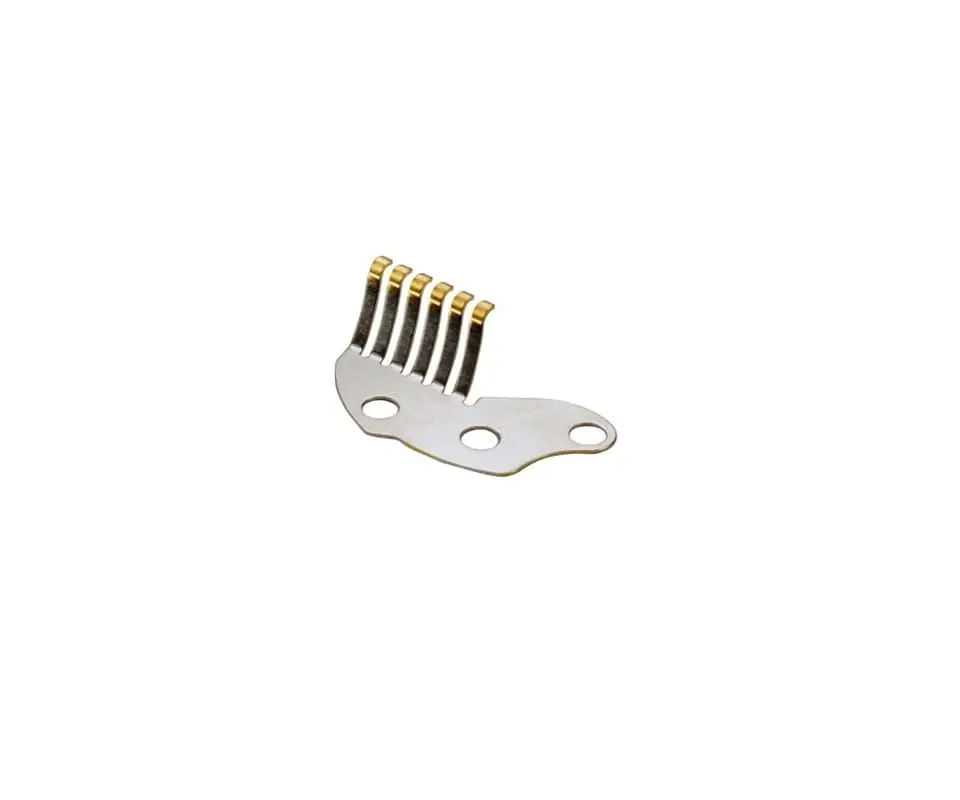
Outdoor lighting and power distribution terminals in construction industry applications add water ingress as the primary failure driver. A terminal block inside an IP65-rated outdoor enclosure that is opened for maintenance during rain can trap moisture inside when reclosed.
The terminal must survive this intermittent wetting without the continuous electrolyte exposure of an embedded terminal. Nickel-plated brass terminals with a 5 µm nickel barrier satisfy this requirement for most outdoor construction applications, providing a 15–20 year service life in intermittently wet conditions at a cost below stainless steel alternatives.
[Compliance Anchor]: Signal-level terminals for building automation systems must demonstrate contact resistance below 20 milliohms at 10 mV and 1 mA per IEC 60512-2 test 2a, measured on gold-plated contacts — tin-plated terminals produce false-pass results when tested at higher voltages that overcome the tin oxide layer.
💡 Signal vs. Power Terminal Selection: Spec’ing a tin-plated terminal for a DALI bus saves pennies per position but introduces intermittent signal dropouts that building commissioning cannot distinguish from network addressing faults — request a plating recommendation matched to your signal-level current and environmental exposure before locking the terminal bill of materials.
Corrosion Defense & Service Life
Plating Hierarchy by Exposure Environment
Plating selection for construction terminals follows a clear hierarchy based on the exposure environment. Indoor, climate-controlled installations (offices, data centers, residential) use tin-plated brass terminals with a 2.5 µm nickel barrier, providing 30+ years of service life at the lowest material cost.
Outdoor but sheltered installations (under-eave junction boxes, parking garage conduit) require nickel-plated brass with a 5 µm nickel layer to survive intermittent condensation and atmospheric sulfur exposure without pitting.
Embedded or continuously wet installations demand materials beyond brass entirely — 304 stainless steel terminals with citric acid passivation per ASTM A967 are the baseline, with 316 stainless steel specified for coastal or de-icing salt exposure environments where the additional molybdenum content provides pitting resistance against chloride ions.
Kravzik validates construction terminal corrosion resistance through nickel plating process qualification using electrochemical impedance spectroscopy on plated terminals after 2,000 hours of salt fog exposure per ASTM B117. This measurement technique detects early-stage porosity in the nickel barrier before visible corrosion products appear, predicting the terminal’s 20-year corrosion behavior from a 12-week accelerated test.
Production lots are monitored with periodic salt fog exposure on statistical samples, ensuring that plating bath aging does not degrade the barrier properties below the qualified baseline.
[Compliance Anchor]: Nickel barrier plating for construction terminals in outdoor environments must demonstrate zero base metal corrosion after 96 hours of neutral salt spray per ASTM B117, verified at 10× magnification at the screw thread root — the thinnest plating location on a stamped terminal and the site where corrosion initiates during field exposure.
Compliance Pass
Terminal blocks passing UL listing with qualification samples can develop dezincification from production lots plated across different baths, causing intermittent ground faults years after building occupancy. Kravzik stamps construction-grade terminals with XRF-verified nickel barrier plating, shipping every lot with corrosion resistance data and UL 486 torque retention certificates.
Send us your terminal requirements for a construction-grade qualification package, including corrosion resistance data and UL 486 torque retention certificates.
Related Engineering Resources
- Brass C26000 mechanical properties and dezincification resistance in alkaline environments in brass material property data sheets
- Nickel barrier plating for corrosion-resistant electrical terminals in embedded and outdoor applications in nickel plating process capabilities
- Heavy-gauge stamping for power distribution terminal blocks in heavy-gauge metal stamping services