USCAR-Validated: Automotive Stamped Electrical Terminals Engineering Guide
An engine ECU terminal that passes incoming inspection at 25°C can generate intermittent CAN bus faults after 50,000 km — a single terminal with normal force relaxation under 1,000 thermal cycles from -40°C to +125°C triggers a warranty repair that replaces the entire harness. The root cause is a terminal material substitution from beryllium copper to phosphor bronze without re-qualifying stress relaxation.
In this guide, you will learn USCAR-2 contact resistance stability for automotive-grade stamped terminals. You will also find IATF 16949 PPAP Level 3 submission and thermal shock validation protocols.
Read on for the full engineering guide.
Under-Hood Thermal Extremes for Stamped Terminals
Automotive terminals experience a thermal environment that cycles between extremes with every drive cycle. A terminal in a connector mounted on the engine block sees ambient temperatures from -40°C during a cold-soak winter start to 125°C during sustained highway operation, with the transition occurring over 15–20 minutes as the engine reaches operating temperature.
This ramp rate produces temperature gradients within the connector: the terminal body reaches 125°C while the wire crimp, 20 mm away and thermally coupled to the copper conductor, lags by 20–30°C. The resulting differential expansion between the terminal body and the crimp barrel stresses the transition zone, where most terminal fractures initiate after 5–10 years of thermal cycling. USCAR-2 thermal shock testing accelerates this mechanism: 100 cycles from -40°C to +125°C with 45-minute dwells and transfer times under 30 seconds, a severity sufficient to expose material fatigue limits that 1,000-cycle commercial testing would miss.
Stress relaxation at temperature is the dominant failure mode for spring-contact terminals in automotive applications. Beryllium copper C17200 retains 85–90% of its initial normal force after 1,000 hours at 125°C, while phosphor bronze C51000 retains only 55–65% under the same conditions. A terminal designed with 3 N of normal force using beryllium copper maintains 2.5 N after thermal aging — well above the 0.5 N minimum required for a stable contact.
The same terminal geometry in phosphor bronze drops to 1.7 N, still functional but with a reduced margin against vibration-induced fretting. This margin reduction manifests as an elevated warranty claim rate: connectors that pass zero-kilometer electrical testing accumulate contact resistance drift over 50,000–100,000 km as the degraded normal force allows micro-motion at the contact interface.
[Compliance Anchor]: Automotive terminals in under-hood applications must demonstrate contact resistance below 10 milliohms after 100 thermal shock cycles per USCAR-2, measured at temperature extremes during the dwell periods — post-exposure measurements at ambient mask the high-resistance events that occur at -40°C when the terminal’s contact beam contracts away from the mating pin.
💡 Material Substitution Risk: Beryllium copper C17200 and phosphor bronze C51000 differ by 30% in stress relaxation performance at 125°C — a substitution without re-qualification under USCAR-2 section 5.3.6 produces terminals that pass incoming inspection at 25°C but fail after 50,000 km of under-hood thermal cycling. request a stress relaxation study before substituting your stamped terminal alloy.
IATF 16949 & PPAP Framework
PPAP Level 3 Dimensional Requirements
Automotive terminal qualification operates through a structured submission framework that converges on the Production Part Approval Process. PPAP Level 3, the default requirement for new automotive components, demands 18 elements of submission including design records, material certifications, dimensional layout results, and process capability studies.
For a stamped terminal, the dimensional layout must include measurements of material thickness, terminal width, contact gap, and the bend radii at every formed feature — typically 20–40 dimensions per terminal measured on a sample of 5 pieces from each of 3 production lots. Process capability studies must demonstrate Cpk ≥1.67 for all critical characteristics identified on the terminal’s control plan, a threshold that forces the stamping process into a capability level where the natural process variation is half the specification width.
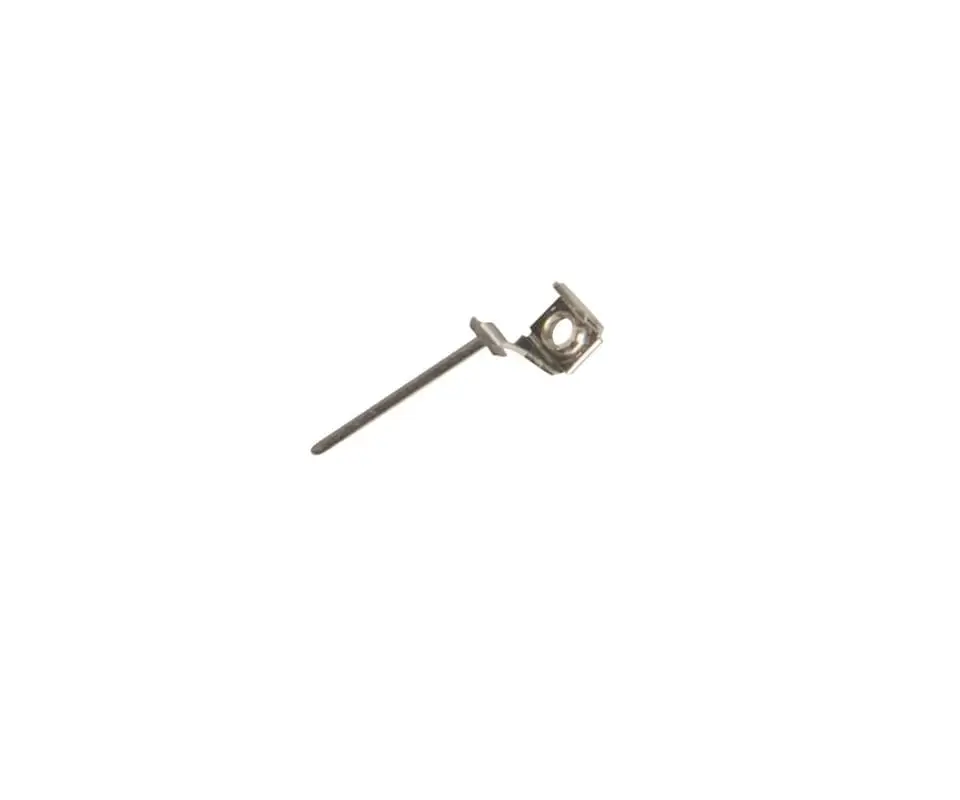
Automotive metal stamping suppliers must also navigate OEM-specific requirements — Volkswagen’s VW 75174, General Motors’ GMW3191, and Ford’s ES-XW7T-1A303 — which layer additional test sequences on top of USCAR-2. These OEM specifications often include proprietary test profiles for vibration, thermal aging, and chemical exposure that the terminal supplier must accommodate within their qualification laboratory.
IATF 16949 Supplier Traceability
IATF 16949 clause 8.5.1.5 adds a requirement that Tier 2 suppliers — including terminal stampers — maintain documented process parameters, tooling maintenance records, and product traceability. This extends beyond the terminal lot to the specific stamping die cavity and the plating cell that produced it.
If a field failure investigation traces a high-resistance terminal to a specific die cavity running 0.01 mm over the punch-to-die clearance specification, the supplier must be able to identify every terminal lot produced in that cavity during the window between the clearance drift and the tooling maintenance correction. This level of traceability demands a production control system that records die cavity, stroke count, plating bath ID, and inspection data for every reel — a capability that separates IATF 16949-certified stampers from commodity suppliers operating under ISO 9001.
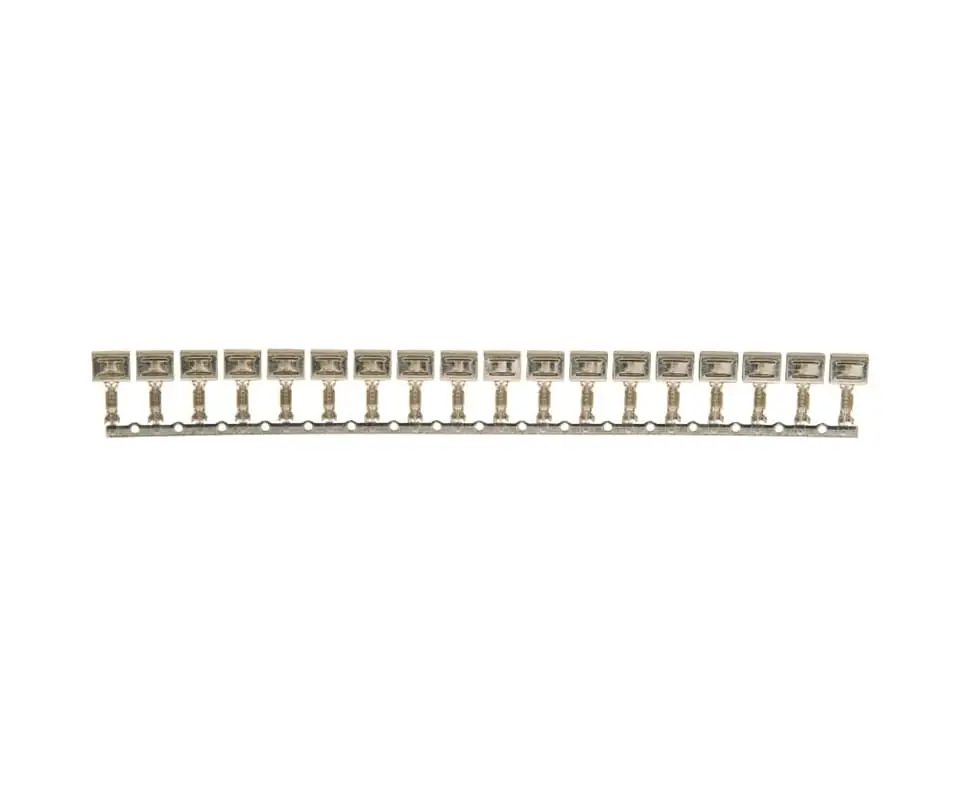
[Compliance Anchor]: Automotive terminal PPAP Level 3 submissions must include process capability data for all critical characteristics on the control plan, with Cpk ≥1.67 demonstrated over a minimum of 3 production lots — a single-lot capability study based on a qualification tooling run is insufficient for production approval and will be rejected during the customer’s PPAP review.
Vehicle System Archetypes
Powertrain High-Temperature Terminal Design
Powertrain connectors represent the highest-temperature automotive terminal application. An engine-mounted sensor connector for a turbocharger actuator operates at ambients up to 150°C measured at the connector body, with the terminal itself reaching 160°C from the combination of ambient temperature and self-heating from the 5 A actuator current. At 160°C, tin plating is metallurgically unsuitable: tin’s recrystallization temperature is approximately 60°C, and at 160°C the tin plating grain structure coarsens within hours, losing the hardness that maintains a low-resistance contact interface.
Gold plating over a nickel diffusion barrier is mandatory for terminals above 125°C continuous, with a minimum gold thickness of 1.25 µm to prevent nickel diffusion to the surface during the 6,000–8,000 hour design life of the connector.
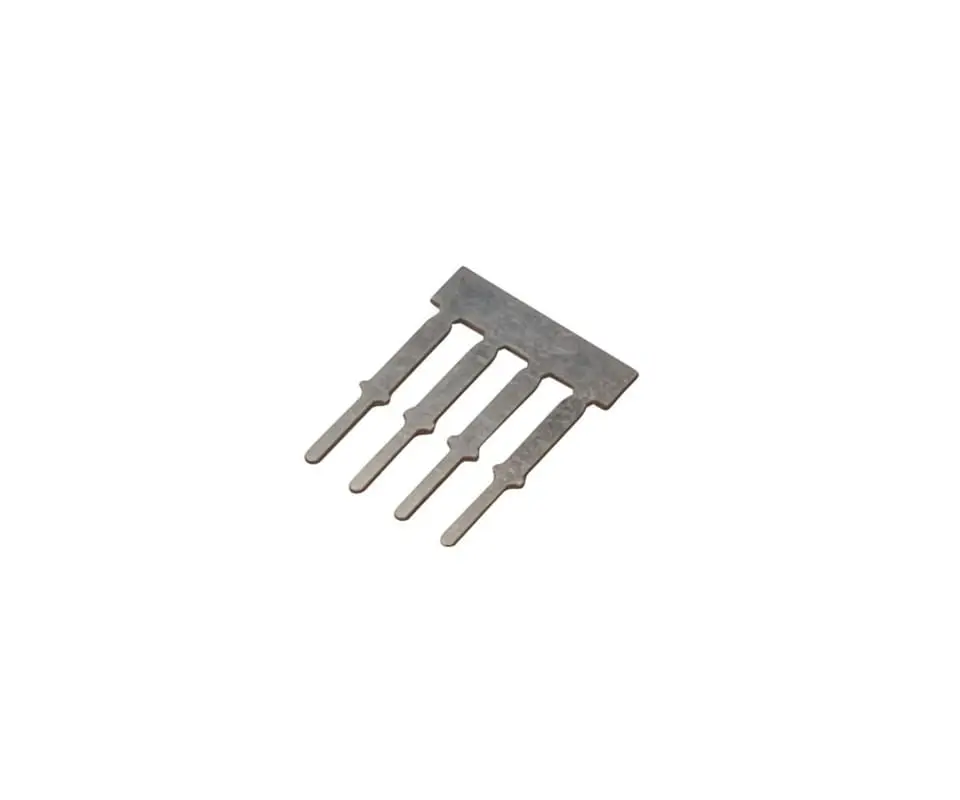
Safety-Critical Contact Continuity
Safety system connectors — airbag squibs, ABS wheel speed sensors, brake-by-wire actuators — add a reliability requirement that exceeds the standard USCAR-2 profile. A terminal inside an airbag clock spring connector must maintain contact continuity through 2 million cycles of steering wheel rotation while surviving the same -40°C to +85°C temperature range as the cabin interior. The failure consequence — an airbag deployment fault — drives a terminal-level requirement for contact resistance monitoring during the life test, with any discontinuity exceeding 0.1 µs flagged as a failure regardless of whether the terminal recovers normal resistance after the event.
Gold plating over beryllium copper is standard for these applications, with the gold providing the stable low-resistance interface and the beryllium copper providing the fatigue resistance for 2 million flex cycles.
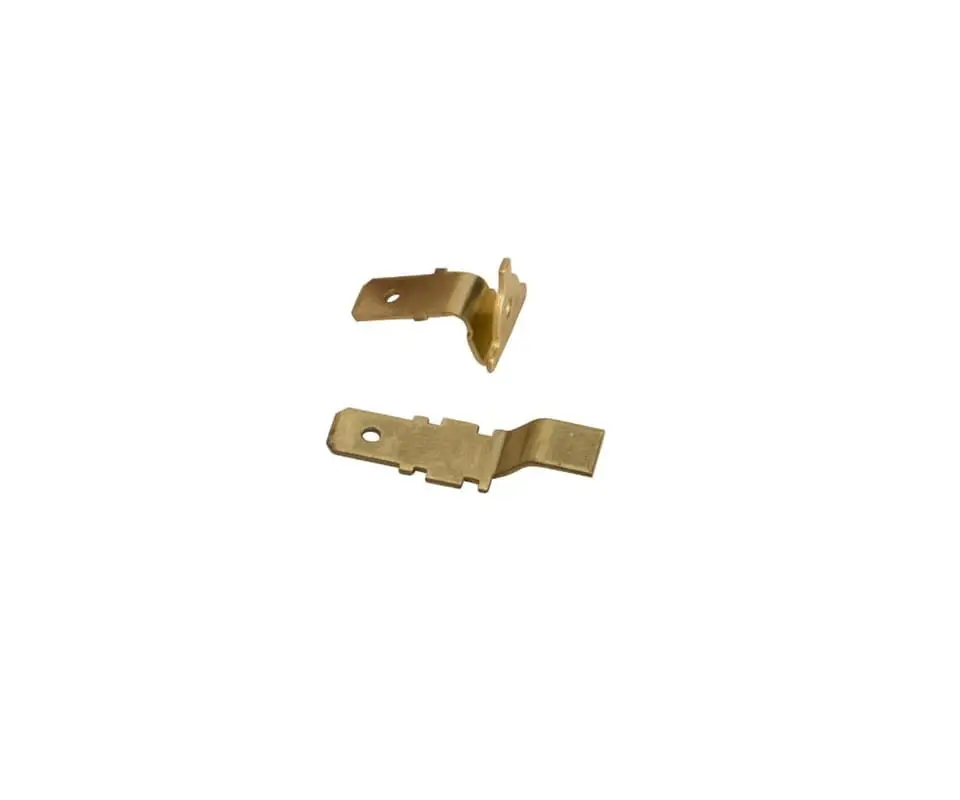
Battery management system terminals in electric vehicles operate at the intersection of high current and low cost. A cell monitoring terminal carries 10 A of balancing current while maintaining contact resistance below 5 milliohms in a temperature environment of -20°C to +85°C. The automotive industry cost pressure for EV components drives the terminal design toward tin-plated brass or phosphor bronze rather than gold — a cost compromise that works because the terminal operates inside a sealed battery enclosure with controlled humidity and no salt exposure.
The qualification burden shifts to long-term thermal cycling in the customer’s production battery module assembly, verifying that the terminal’s normal force does not relax below the fretting threshold over the 8–10 year EV battery warranty period.
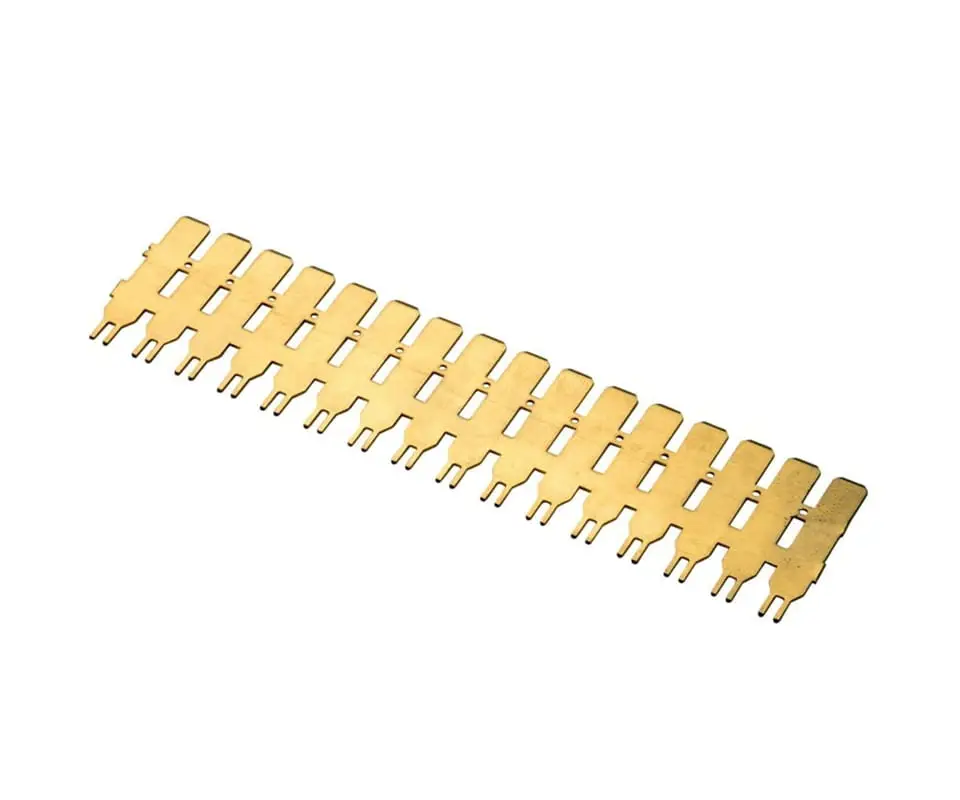
[Compliance Anchor]: Airbag and safety-critical connector terminals must demonstrate zero contact discontinuities exceeding 0.1 µs during the full USCAR-2 vibration profile per ISO 12405-3, with the event detector set to trigger at a 100-nanosecond resolution — the standard 1 µs threshold used for non-safety connectors masks the micro-interruptions that cause airbag warning light illumination.
💡 Safety Terminal Validation Gap: The standard 1 µs discontinuity threshold used for non-safety connectors masks micro-interruptions below 0.1 µs that trigger airbag warning light faults — yet many connector qualification plans default to the 1 µs detector setting. submit your safety-critical terminal specification for a USCAR-2 vibration validation plan using 100 ns event detection resolution.
Production Validation & Traceability
The PPAP approval is a one-time qualification gate. Sustaining production quality across millions of terminals over a 5–7 year vehicle program life requires a different set of controls.
Kravzik monitors automotive terminal production through statistical process control on every critical characteristic: X-bar and R charts for terminal contact gap track tooling wear between maintenance intervals, with control limits set at ±3 sigma from the process mean. A trend of seven consecutive points above or below the centerline triggers a tooling inspection before the process produces out-of-spec terminals, preventing the batch-level nonconformance that would require full lot isolation and a customer notification under IATF 16949 clause 8.7.1.4.
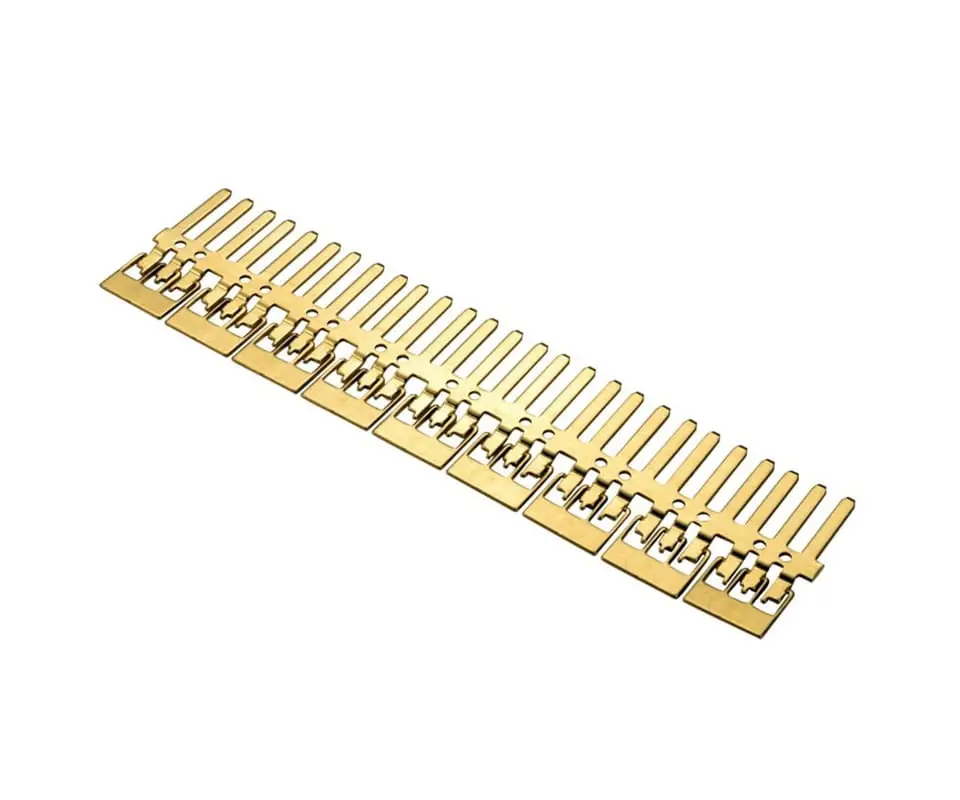
Each reel of automotive terminals carries a unique lot identification code that the customer scans at incoming inspection, linking to a digital record containing the raw material heat number, progressive die stamping production parameters (stroke count, press speed, lubrication rate), plating bath chemistry logs, XRF thickness measurements, and contact resistance data from the in-line test station. If a field failure investigation identifies a terminal from lot 24B7-332 as the root cause, the traceability system identifies every reel produced from the same coil of material, in the same die cavity, and in the same plating batch — enabling a targeted containment action that isolates 500 reels rather than the 5,000 reels that would be quarantined under a date-code-based containment.
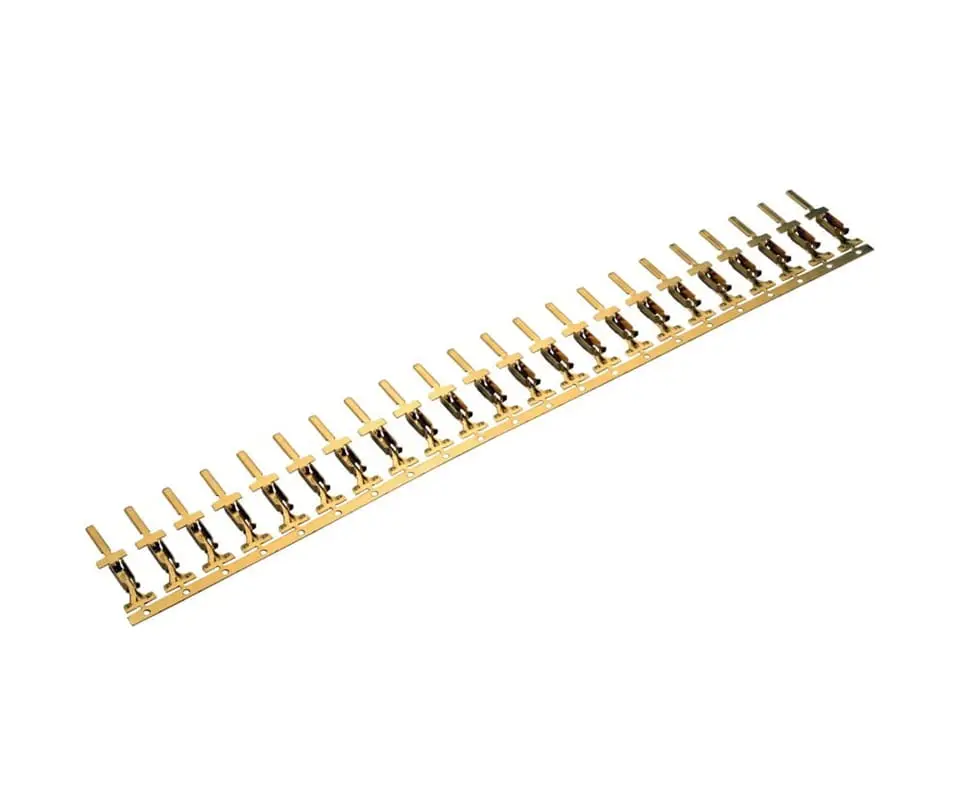
[Compliance Anchor]: Automotive terminal production must maintain SPC charts for all critical characteristics listed on the PPAP control plan, with control limits calculated from a minimum of 25 subgroups of 5 samples each — initiating a tooling inspection when seven consecutive points fall on one side of the centerline, consistent with the Western Electric SPC rules embedded in IATF 16949 clause 9.1.1.1.
Compliance Pass
An unnotified phosphor bronze substitution to reduce cost can cause normal force relaxation triggering CAN bus faults and warranty investigations 18 months into production. Kravzik stamps automotive-grade terminals under IATF 16949-certified process control, shipping every lot with PPAP Level 3 documentation and USCAR-2 qualification data.
Send us your terminal specifications for an automotive PPAP qualification package, including USCAR-2 test data and IATF 16949 lot traceability.
Related Engineering Resources
- Beryllium copper and phosphor bronze stress relaxation data at automotive temperatures in copper alloy material property reference
- Gold and tin plating selection for automotive connectors with USCAR-2 thermal shock data in gold and silver plating process capabilities
- IATF 16949 production part approval and lot-level traceability in quality management system documentation