Vacuum-Rated Reliability: Aerospace Stamped Electrical Terminals Engineering Guide
A satellite power terminal that passes every test at sea level can outgas compounds that condense on the star tracker’s lens in orbit. Residual stamping lubricant not validated per ASTM E595 degrades optical performance below the attitude determination threshold.
In this guide, you will learn low-outgassing material selection for aerospace stamped terminals in vacuum environments. You will also find AS9100 traceability and thermal vacuum test protocols.
Read on for the full engineering guide.
Vacuum Environment Physics
Outgassing Mechanisms and ASTM E595 Validation
Aerospace terminals operate in an environment where conventional failure modes are joined by physics unique to vacuum. At orbital altitudes, the ambient pressure drops to 10⁻⁶ to 10⁻⁹ torr, and residual organic compounds on the terminal surface gain enough vapor pressure to desorb and travel by line-of-sight to any colder surface.
These contaminants — stamping lubricant residues, electroplating bath additives, polymer tooling wear particles — originate from processes qualified for terrestrial applications but never validated for vacuum outgassing. The gold-plated terminal itself remains electrically functional. The problem manifests 30 cm away, on a lens, mirror, or detector surface whose performance depends on sub-nanometer surface cleanliness.
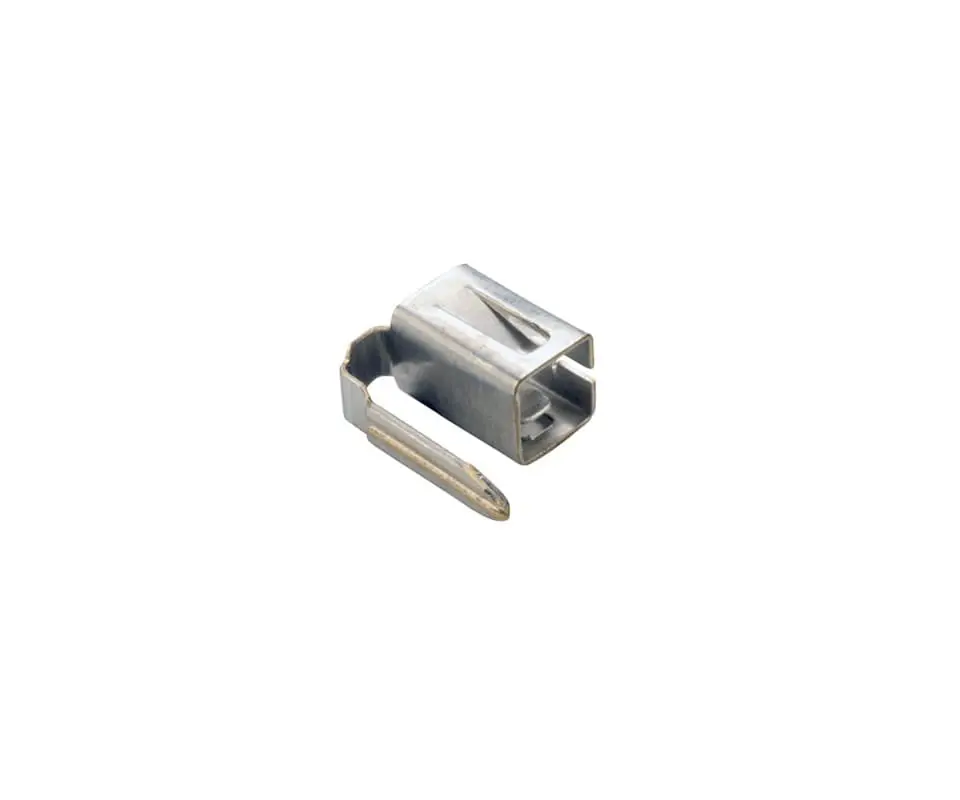
ASTM E595 quantifies this risk through two metrics: total mass loss (TML, the percentage of the sample that outgasses) and collected volatile condensable material (CVCM, the percentage that recondenses on a collector plate held at 25°C). Aerospace terminals must deliver TML below 1.0% and CVCM below 0.1% — thresholds that commercial plating processes rarely meet without dedicated cleaning, bakeout, and process chemistry selection.
Cold Welding Prevention in Hard Vacuum
Cold welding introduces a second vacuum-specific risk. In ambient air, gold-plated contacts are protected from cold welding by adsorbed gas layers and surface oxides that act as a barrier to metal-to-metal adhesion. In hard vacuum, these layers desorb within hours, allowing clean gold surfaces in stationary contact to diffusion-bond over time.
A separable connector contact that sits unmated for months during satellite integration and launch can weld shut, requiring forces exceeding 10× the normal extraction force to separate — forces that damage the connector insert or pull the terminal from its retention feature.
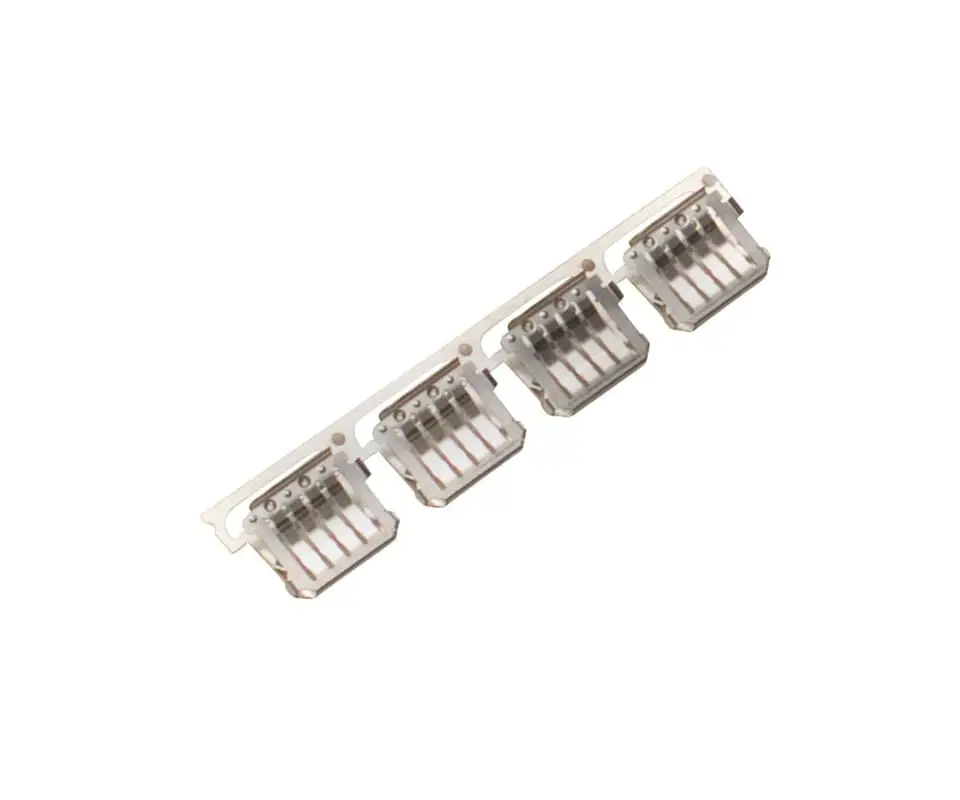
The mitigation is a gold alloy plating with a co-deposited hardener (0.1–0.3% cobalt or nickel) that increases the surface hardness from 70–90 HV (pure gold) to 130–180 HV, raising the activation energy for diffusion bonding above the threshold that occurs at orbital temperatures from -50°C to +85°C.
[Compliance Anchor]: Aerospace terminals must demonstrate zero cold welding of gold-plated separable contacts after 90 days of static contact at 10⁻⁶ torr and +85°C, with extraction force remaining below 2× the as-manufactured value — testing at ambient pressure provides no cold welding risk data and is an invalid qualification shortcut for vacuum-rated connectors.
Space-Qualification Standards
Thermal Vacuum Test Protocol Extension
Aerospace connector qualification for space applications operates through a layered standards architecture. SAE AS39029 defines the performance requirements for electrical contacts used in MIL-DTL-38999 and derivative connectors, specifying contact resistance, mating durability, and environmental test sequences.
For space applications, the standard environmental sequence is extended to include thermal vacuum cycling — 500 cycles from -65°C to +125°C at pressures below 10⁻⁵ torr, with contact resistance monitored in situ during the hot and cold dwells.
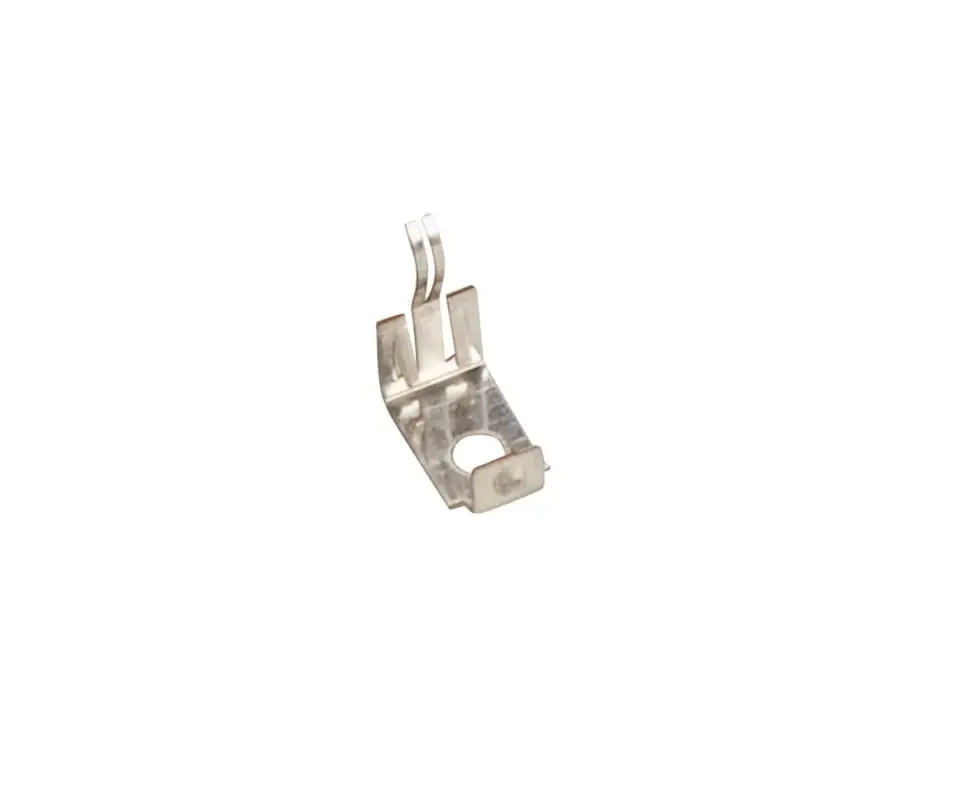
This in-situ measurement is critical because the dominant failure mode in thermal vacuum is not permanent resistance increase but intermittent discontinuities that occur only at temperature extremes, when differential thermal expansion between the terminal, the insert, and the pin reaches maximum displacement.
AS9100, the aerospace quality management standard, adds process control requirements beyond ISO 9001. Clause 8.5.1 mandates that the terminal supplier maintain documented process parameters for every production lot, including stamping die stroke count, plating bath temperature and current density, and post-plate bakeout time and temperature. Any change to these parameters requires re-qualification unless the change falls within the supplier’s internally validated process window — a requirement that forces aerospace terminal production into a fixed, validated process rather than the adaptive process adjustments common in commercial stamping.
Aerospace metal stamping suppliers must also navigate the NASA EEE-INST-002 outgassing database and the ESA ECSS-Q-ST-70-13 standard for European space programs. These standards require that every material in the terminal — base alloy, underplate, topcoat, and any post-treatment — is individually listed in an approved materials database with published outgassing data. A terminal using a plating chemistry not listed in the NASA database cannot fly on a NASA-funded mission, regardless of its electrical performance.
[Compliance Anchor]: Aerospace terminal process validation per AS9100 clause 8.5.1 requires documented evidence that the terminal’s plating process produces parts within the qualified ASTM E595 outgassing limits on every production lot — not only on qualification samples produced under laboratory conditions with freshly-made plating solutions.
💡 Outgassing Qualification Gap: Terminal suppliers who provide type-level ASTM E595 data from qualification samples — but not batch-level data from production lots — leave your satellite program exposed to outgassing failures detected only during integrator-level thermal vacuum testing. request batch-level outgassing verification for every production lot before delivery to your satellite assembly line.
Aerospace Stamped Terminal Archetypes
Satellite Power Distribution Terminals
Satellite power distribution terminals operate in an environment where electrical performance is only one of four qualification vectors. A bus bar terminal carrying 50 A from the solar array to the power conditioning unit uses silver-plated copper for minimum I²R loss, but the silver plating must meet the same ASTM E595 outgassing limits as gold.
This constraint eliminates most commercial silver plating baths because their organic brighteners exceed the 0.1% CVCM threshold.

The terminal’s bolted joint must also survive launch vibration without the benefit of periodic retorquing: once the satellite is in orbit, the joint cannot be accessed. This demands a conical spring washer under the bolt head, typically made from 17-7 PH stainless steel, that maintains the joint preload as the terminal and busbar expand and contract across the -65°C to +125°C operational range.
RF Connector Stamped Contact Design
RF connector terminals in satellite communication payloads add impedance control to the qualification burden. A coaxial connector carrying 10 W of Ku-band uplink at 14 GHz requires the stamped center contact’s diameter to remain within ±5 µm of the designed value across the full thermal vacuum range, because the impedance of a coaxial line depends on the ratio of inner to outer conductor diameter.
A 5 µm shift in terminal diameter changes the line impedance by 0.5 ohms, increasing the VSWR from 1.2:1 to 1.3:1 — the difference between meeting and exceeding the link budget margin for a satellite at the edge of its coverage footprint.
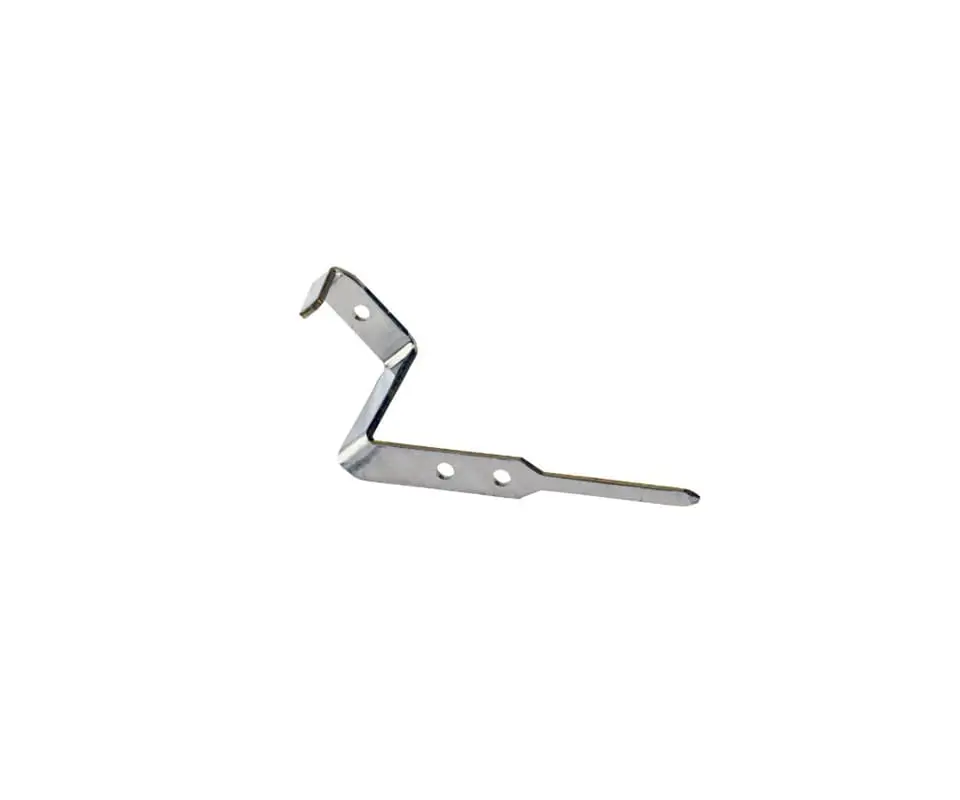
This constraint drives terminal material selection toward alloys with low thermal expansion coefficients — beryllium copper at 17 µm/m·°C rather than brass at 20 µm/m·°C — and demands post-stamp dimensional inspection with laser micrometers rather than contact gauges that can deform the terminal.
Launch Vehicle Vibration Endurance
Launch vehicle connectors face the most extreme but shortest-duration environment. A connector on the engine gimbal actuator experiences 50 g random vibration during the launch phase, then operates in the vacuum of space during the upper stage burn.
The aerospace industry terminal must survive the vibration without contact fretting that would increase resistance during the engine’s firing sequence, where a 5-milliohm transient in a control signal path could trigger an engine shutdown command. Gold plating thickness must be 2.5 µm minimum — not the 1.25 µm used in satellite applications — because the vibration environment drives more aggressive fretting wear at the contact interface during the launch phase.
[Compliance Anchor]: RF connector center contacts for space applications must demonstrate VSWR below 1.25:1 at the maximum operating frequency after thermal vacuum cycling, measured in a production-representative connector assembly — terminal-level dimensional inspection cannot detect the impedance shift caused by contact beam relaxation that occurs during the first 100 thermal vacuum cycles.
💡 Thermal Vacuum Validation Gap: Contact resistance measured at room temperature after cycling misses the intermittent discontinuities that occur only at the -65°C cold dwell in vacuum — the failure that satellite integrators detect during payload-level TVAC testing. submit your connector specification for a thermal vacuum test plan with in-situ contact resistance monitoring at both temperature extremes.
Cleanliness and Process Control
Multi-Stage Cleaning and Plating Qualification
The path from commercial terminal to space-qualified terminal runs through cleanliness. After stamping and forming, the terminal carries residues from the stamping lubricant — a chlorinated or synthetic oil that prevents galling at the punch-die interface but violates every aerospace outgassing budget.
A multi-stage cleaning process removes these residues: alkaline degreasing at 60°C dissolves the bulk lubricant, followed by deionized water rinsing, citric acid activation to remove surface oxides, and a final isopropyl alcohol rinse in a Class 100 cleanroom.
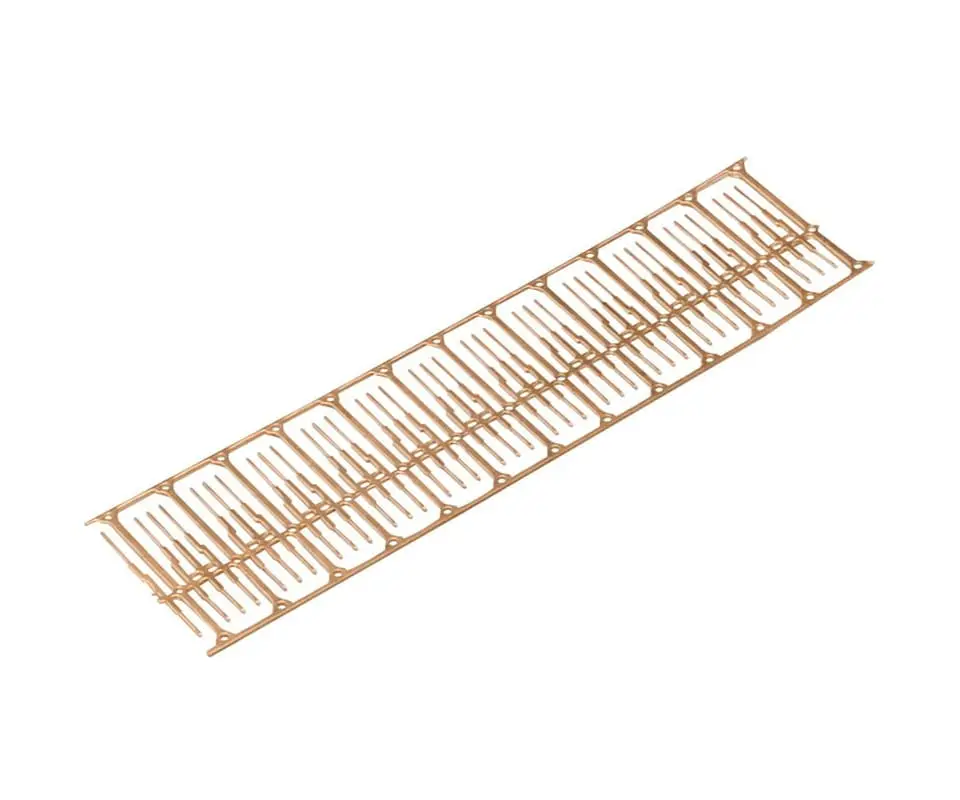
The cleaned terminal is then gold-plated within 4 hours to prevent re-oxidation of the activated copper surface, with the plating bath using a cobalt-hardened gold chemistry whose organic brightener package has been pre-qualified for low outgassing per ASTM E595.
Vacuum Bakeout and Batch-Level Validation
Post-plating vacuum bakeout completes the outgassing mitigation. Terminals are loaded into a vacuum oven at 10⁻⁵ torr and held at 125°C for 24 hours, driving off residual solvents and low-molecular-weight organic compounds before the terminals are packaged.
Kravzik validates this process by performing ASTM E595 testing on terminals pulled from each bakeout batch, with the test results linked to the lot identification code on the terminal’s certificate of conformance.
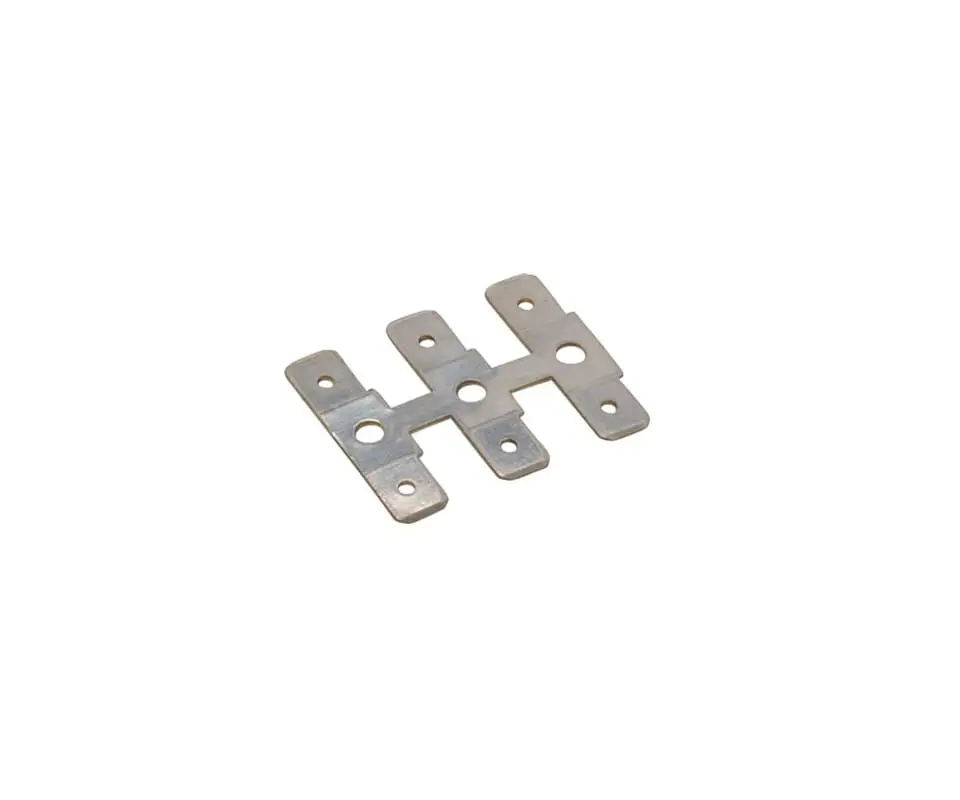
This batch-level validation — rather than type-level qualification — satisfies the aerospace gold plating process control requirements of AS9100 clause 8.5.1 and provides the objective quality evidence that satellite integrators demand during source inspection. Every terminal lot ships with outgassing test reports, gold plating XRF certificates, and full material traceability from mill heat number to finished reel — structured for direct integration into your satellite’s as-built configuration data package.
[Compliance Anchor]: Aerospace terminal production must include post-plating vacuum bakeout at 125°C for 24 hours minimum at 10⁻⁵ torr, with bakeout temperature and duration recorded per lot and verified by batch-level ASTM E595 outgassing test results — type-level qualification without production lot verification is insufficient for spaceflight hardware per NASA-STD-8739.6.
Compliance Pass
Plating chemistry changed during production without re-qualification can exceed ASTM E595 outgassing limits and contaminate optical surfaces during thermal vacuum testing. Kravzik stamps aerospace-grade terminals with AS9100-validated process control, shipping every lot with batch-level outgassing reports and full material traceability for your satellite’s configuration data package.
Send us your contact requirements for a space-qualified terminal package, including ASTM E595 outgassing data and AS9100 lot traceability.
Related Engineering Resources
- Beryllium copper C17200 thermal expansion and spring force retention data in copper alloy material property reference
- Low-outgassing hard gold plating for vacuum-rated separable contacts in gold and silver plating process capabilities
- AS9100 quality management and lot-level traceability for aerospace supply chains in quality management system documentation